Poor attic ventilation bakes your shingles from below. A Portland roofer explains how heat buildup degrades asphalt and what proper ventilation actually buys you.
When homeowners ask how long their new roof will last, they're usually thinking about shingle quality: thickness, manufacturer rating, premium vs. standard product. The shingles matter. But the condition of the space directly beneath them matters just as much.
Attic ventilation is the most under-discussed factor in shingle lifespan. Research estimates that proper attic ventilation can extend shingle life by 7% to 15% compared to the same shingles on a poorly ventilated roof. In practical terms, this is the difference between a 30-year shingle performing as rated or failing five or more years early.
Evolution RoofWorks owner Sean O'Hare addresses attic ventilation on every job in the Portland area. Most roofers don't. Here's why it matters and what happens to shingles when it's ignored.
They estimate 7% to 15% extra life on shingles when you have a properly ventilated attic. Most Portland homeowners never hear this from their roofer.
What Happens to Shingles in an Overheated Attic
Heat Builds Up Fast
Without adequate airflow through the attic, summer heat turns the space into an oven. In the Pacific Northwest, summer temperatures that seem moderate at ground level can produce attic temperatures of 130 to 150 degrees or more. The attic becomes a sustained high-heat environment for everything inside it, including the underside of the roof deck and the shingles above.
Asphalt Is Heat-Sensitive
Asphalt shingles are composed primarily of asphalt, granules, and a fiberglass or felt mat. The asphalt is the binder that holds granules in place and provides the waterproofing layer. Heat accelerates asphalt aging. The binder becomes brittle, losing its flexibility and its grip on the granule layer. The result is premature granule loss, cracking, and curling, all of which reduce the shingle's ability to shed water effectively.
The Roof Deck Is Also Affected
The plywood or OSB sheathing beneath the shingles is not immune to heat exposure. Repeated thermal cycling, significant heating and cooling across each day, stresses the panels. Combined with any moisture present in the attic, this accelerates warping and delamination. A heat-stressed deck is more vulnerable to moisture penetration when small defects appear in the shingle surface above.
The Other Direction: Winter Moisture Buildup
Heat in summer is one half of the problem. In Portland's wet winters, moisture management in the attic becomes the primary concern.
Warm, moist air from the living space rises into the attic. In a well-ventilated attic, this air exits through the exhaust vents before it can condense. In a poorly ventilated attic, it stalls, reaches the cooler surfaces of the roof deck, and condenses into liquid moisture that accumulates day after day across the rainy season.
That moisture soaks into insulation, reducing its R-value. It feeds mold and mildew. It creates the conditions for long-term wood rot that may not become visible until significant damage has occurred. The connection between winter moisture buildup and attic mold is one more reason ventilation belongs in every roof assessment, not just the ones where a homeowner thinks to ask.
Why Most Portland Roofers Skip This Step
Addressing attic ventilation adds scope to a project. It takes time to assess and sometimes requires additional materials and labor to correct. For a contractor focused on job throughput, it's easy to skip. Most homeowners aren't asking about ventilation, which means there's no customer pressure to address it.
Sean O'Hare at Evolution RoofWorks addresses ventilation on every project because skipping it means installing a new roof on top of a system that will underperform from day one. The shingles may be rated for 30 years. If they're sitting over an inadequate attic, that rating is effectively meaningless.
Ventilation is part of the scope on every replacement we quote, not a line item that appears later.
See how our roof replacement process worksWhat Proper Ventilation Actually Requires
The 1:150 Rule
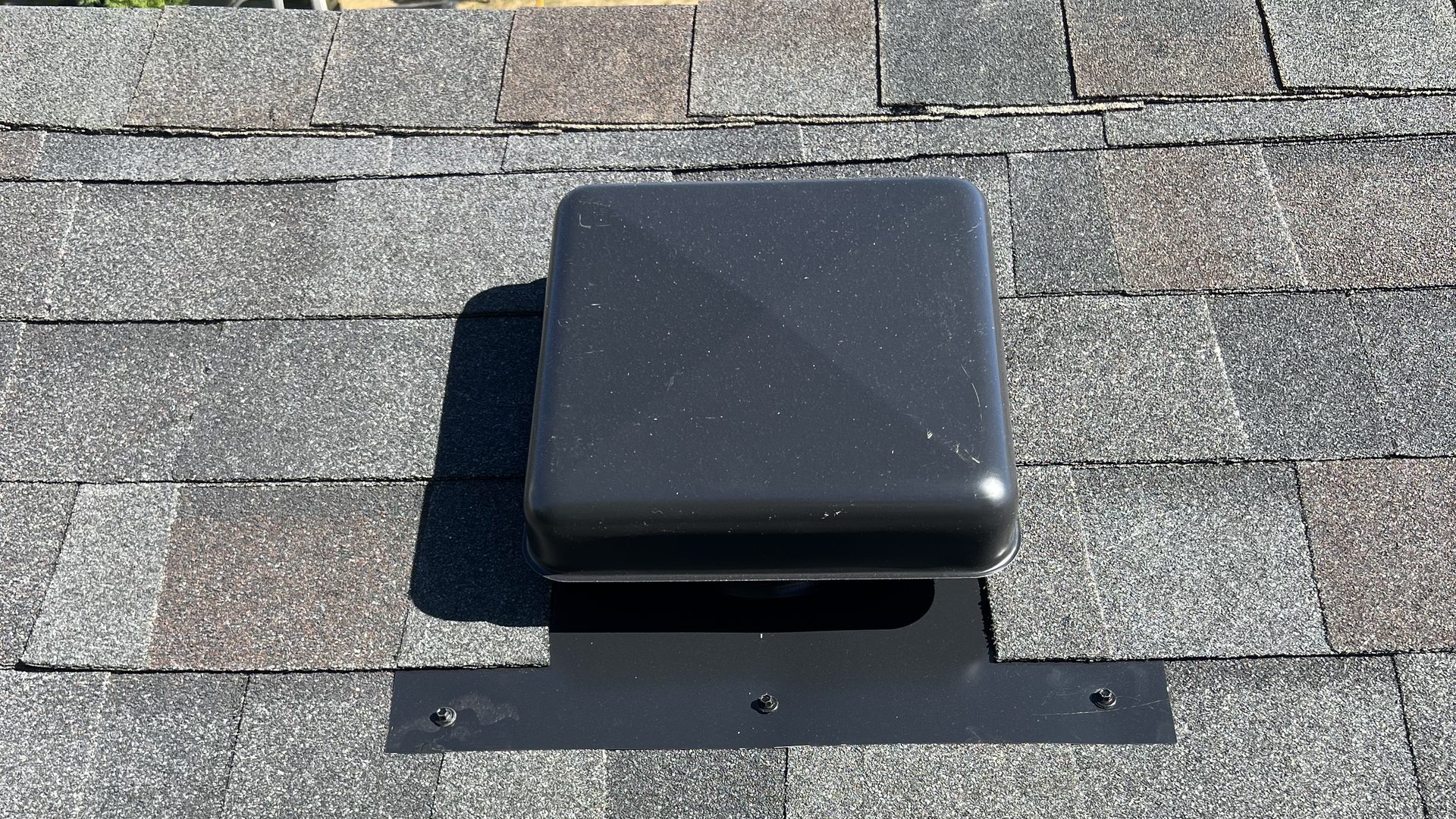
Oregon's current building code requires a minimum of 1 square foot of net free ventilation for every 150 square feet of attic floor space, split between intake vents at the soffits and exhaust vents at the ridge. Based on what Sean sees on every inspection, roughly 90% of Portland-area homes don't meet this standard.
Most homes in Beaverton, Tigard, and Lake Oswego were built to the older 1:300 standard, which is half of what code requires today.
Read why your attic ventilation is probably under codeBalanced Intake and Exhaust
Ventilation isn't just about having vents. It requires the right balance. Exhaust-only or intake-only setups don't produce the airflow needed to flush heat and moisture from the attic. Air needs a clear path in and a clear path out. When that path is functional and balanced, the attic temperature stays close to the outside temperature and moisture doesn't accumulate.
Clearing Common Blockages
In many Portland-area homes, especially older ones, the problem is blocked vents rather than absent ones. Insulation pushed too close to the eaves blocks soffit intake. Ridge vents replaced with solid cap shingles during a prior re-roof block exhaust. Identifying and clearing these blockages often produces significant airflow improvement without major work.
A ventilation assessment comes down to a short list of checks:
- Net free ventilation area measured against the attic floor square footage, not estimated by eye
- Intake at the soffits that is open, not packed behind insulation at the eaves
- Exhaust at the ridge that was never capped over during a previous re-roof
- Intake and exhaust balanced against each other so air has a clear path in and out
- Signs of the failure this prevents: damp or compressed insulation, condensation on the deck, and darkened sheathing
The Warranty Implication
Most shingle manufacturers, including CertainTeed, include attic ventilation compliance requirements in their warranty terms. If a roof fails and an inspector determines that attic ventilation was inadequate at installation, the warranty claim can be denied.
A homeowner who paid for a 30-year warranty on shingles that failed at year 15 due to heat degradation caused by poor ventilation may find that the warranty provides no remedy. The installer didn't ensure ventilation compliance, and the claim is denied. This is one of the most common but least-discussed reasons warranty claims fail.
Ventilation compliance language sits inside the shingle warranty itself. CertainTeed publishes its warranty terms and installation requirements for homeowners to read directly.
Review CertainTeed's roofing warranty documentationVentilation is not the only fine print that decides whether a warranty pays. Here's the math on what a standard claim actually covers.
Read what your roof warranty really coversEvolution RoofWorks addresses this by making ventilation assessment a standard part of every project, in Tigard, Beaverton, Aloha, and across the Portland metro area.
Frequently Asked Questions
Does attic ventilation actually extend shingle life?
Research estimates that proper attic ventilation extends shingle life by roughly 7% to 15% compared to the same shingles installed over a poorly ventilated attic. On a 30-year shingle, that difference can be five or more years of service life.
How does poor attic ventilation damage shingles?
Without airflow, attic temperatures can reach 130 to 150 degrees or more in summer. That sustained heat accelerates aging in the asphalt binder that holds the granules and provides waterproofing, which leads to premature granule loss, cracking, and curling.
How much attic ventilation does Oregon building code require?
Oregon's current code requires a minimum of 1 square foot of net free ventilation for every 150 square feet of attic floor space, split between intake vents at the soffits and exhaust vents at the ridge. Balance between intake and exhaust matters as much as total vent area.
Can poor attic ventilation void a shingle warranty?
It can. Most shingle manufacturers, including CertainTeed, build attic ventilation compliance into their warranty terms. If an inspector determines ventilation was inadequate at installation, a claim on prematurely failed shingles can be denied.
How do I know if my Portland attic is under-ventilated?
The common signs are an attic that feels like an oven in summer, condensation or damp insulation in winter, blocked soffit vents behind insulation, and a ridge that was capped with solid shingles during a prior re-roof. A physical attic inspection confirms it. Evolution RoofWorks includes that assessment in every free roof evaluation.
Based in Tigard and want a roofer who knows how these homes were built?
Tigard roofing servicesSchedule a free roof and attic assessment. We'll measure the ventilation you actually have and tell you what it's costing your shingles.
Schedule a free roof and attic assessmentRelated Service
Need help with roof inspections?

Sean O'Hare
Founder & CEO, Evolution RoofWorks
Evolution RoofWorks is a licensed, education-first roofing contractor (CCB # 251336) serving the Portland metro area.